
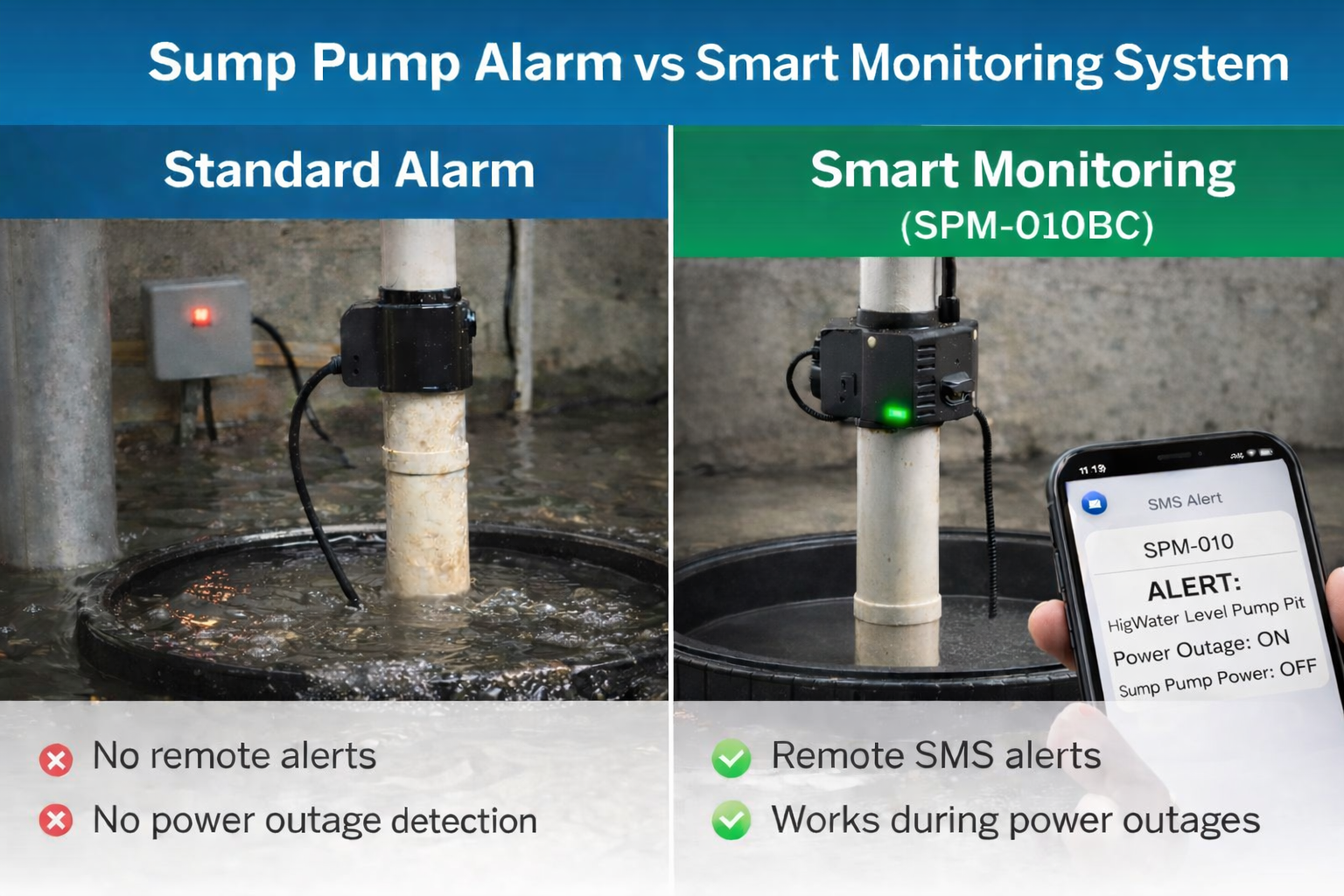
When it comes to protecting your basement from flooding, many homeowners rely on a sump pump alarm. While these devices provide basic warning capabilities, modern smart monitoring systems offer significantly more reliable protection—especially during critical conditions like power outages.
Understanding the difference between a standard sump pump alarm and a smart monitoring system is essential for choosing the right solution for your home.
Looking for reliable protection? Explore our SPM-010 Sump Pump Monitor designed for real-time alerts and operation without Wi-Fi.
What Is a Standard Sump Pump Alarm?
A traditional sump pump alarm is a simple device that detects high water levels in the sump pit and triggers a local audible alert. Some models may include basic battery backup, but functionality is typically limited.
- Audible alarm only (inside the home)
- No remote monitoring capability
- Limited or no power outage detection
- Requires someone to be present to hear the alarm
While this type of system may work when you are at home, it provides little protection when you are away.
What Is a Smart Sump Pump Monitoring System?
A smart sump pump monitoring system continuously tracks multiple conditions and provides remote alerts. Advanced systems use cellular communication to remain operational even during power outages or internet failures.
- Real-time remote alerts (SMS or mobile device)
- Power outage detection
- Water level monitoring with adjustable thresholds
- Temperature monitoring
- Continuous system status visibility
For example, the SPM-010 Sump Pump Monitor provides real-time monitoring and can send alerts directly via cellular communication, ensuring operation even when Wi-Fi is unavailable.
Key Differences
| Feature | Standard Alarm | Smart Monitoring System |
|---|---|---|
| Water Level Detection | ✔ | ✔ |
| Remote Alerts | ✖ | ✔ |
| Power Outage Detection | ✖ | ✔ |
| Works Without Wi-Fi | ✖ | ✔ (Cellular) |
| Real-Time Status | ✖ | ✔ |
| Pump Failure Detection | ✖ | ✔ |
Why Standard Alarms Often Fail
Standard sump pump alarms rely on local notification. This creates several risks:
- You are not at home to hear the alarm
- The alarm may fail during a power outage
- No visibility into system status
In many real-world cases, flooding occurs not because the sump pump fails, but because no one is aware of the problem in time.
Why Cellular Monitoring Is More Reliable
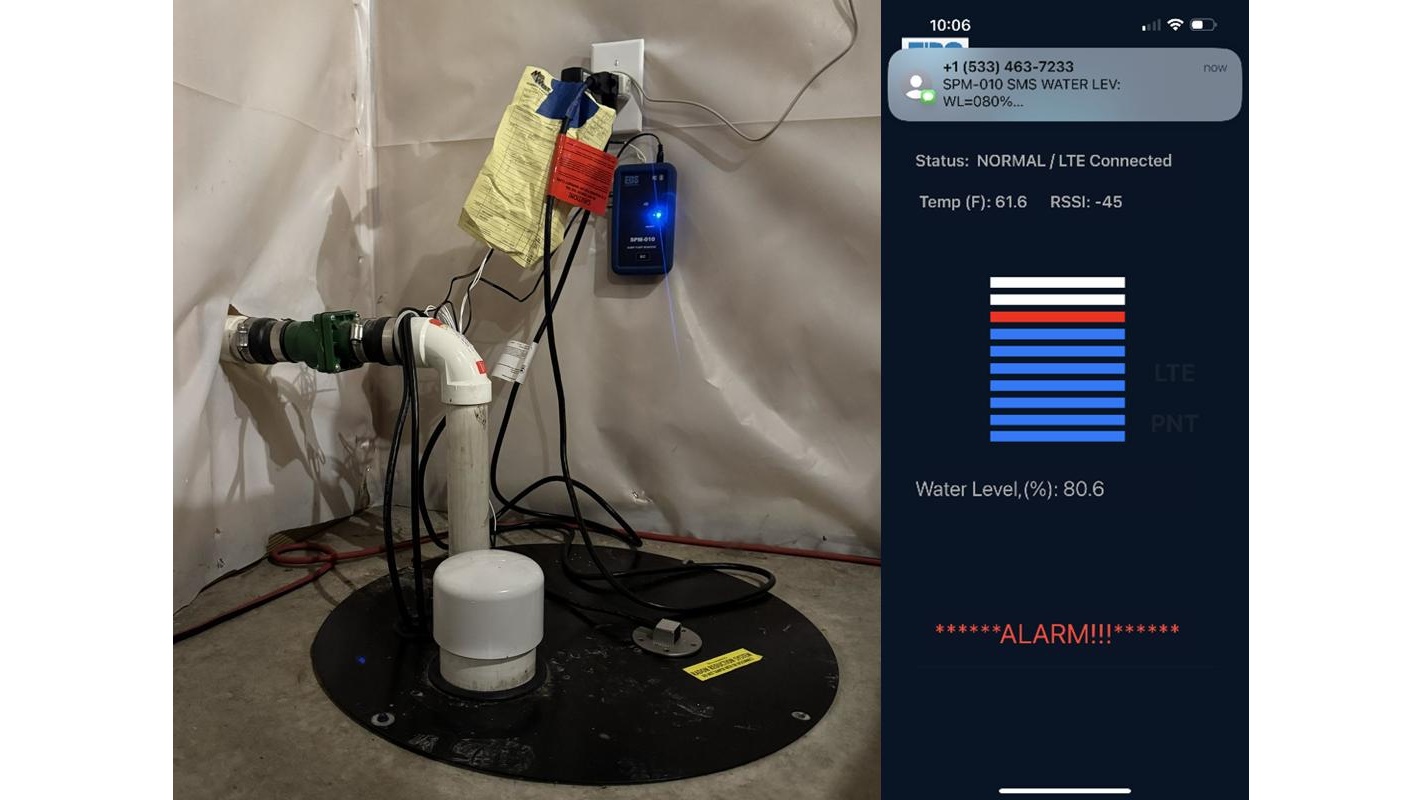
Smart monitoring systems that use cellular communication operate independently of home internet infrastructure. This is critical because power outages often disable Wi-Fi routers and standard monitoring systems.
With cellular monitoring, alerts are delivered even during outages, and users can request system status via SMS at any time.
Which System Should You Choose?
If you are looking for basic, low-cost notification while at home, a standard sump pump alarm may be sufficient.
However, if you want reliable protection—especially when away from home—a smart monitoring system provides significantly greater security and peace of mind.
- Reliable alerts anytime, anywhere
- Protection during power outages
- Full visibility into system status
Conclusion
A sump pump alarm can provide basic warning, but it is not designed for modern monitoring needs. Smart monitoring systems offer real-time visibility, reliable alerts, and operation under real-world conditions.
Choosing the right system can make the difference between preventing a problem and discovering it too late.